Recently, the Innovation Team of Climate Change and Carbon Sequestration and Mitigation at the Institute of Environment and Sustainable Development in Agriculture, Chinese Academy of Agricultural Sciences, revealed the patterns of regional transfer of carbon emissions driven by international rice trade, and quantified the global mitigation potential of climate-smart agriculture (CSA). The related findings have been published in European Journal of Agronomy.
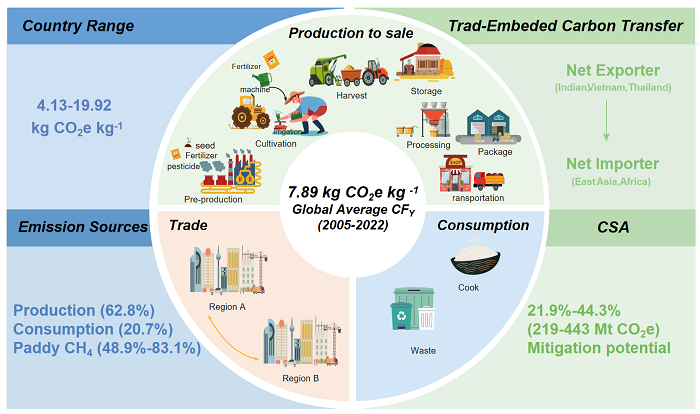
Fig.1 Mitigation potential of carbon footprint embedded in international rice trade
For a long time, assessments of the carbon footprint (CF) of the global rice-based food system (RFS) have been limited due to unclear system boundaries and the omission of emissions embedded in international trade. This has led to ambiguity in the allocation of emission reduction responsibilities among countries, making it difficult to form a coordinated global strategy for emissions reduction.
The study found that the CF of RFSs across major producing countries averaged 7.89 kg CO2e kg-1, driven predominantly by the production (62.8%) and consumption (20.7%) stages, with CH4 emissions from paddy fields as the largest single source (48.9-83.1%). Thanks to advanced cultivation techniques and management practices, East Asian countries achieved the world's lowest intensity (4.58 kg CO2e kg-1), 41.95% below the global mean. Multi-scenario analysis demonstrated that fully adopting CSA practices could reduce the RFS CF by 21.9-44.3% by 2060 compared with 2022 levels, without compromising global rice supply, which represented a mitigation potential of 219-443 Tg CO2e yr-1. The results have proven the immense potential of agricultural technological innovation in addressing climate change, charting a clear path for the low-carbon transition of the global rice industry.
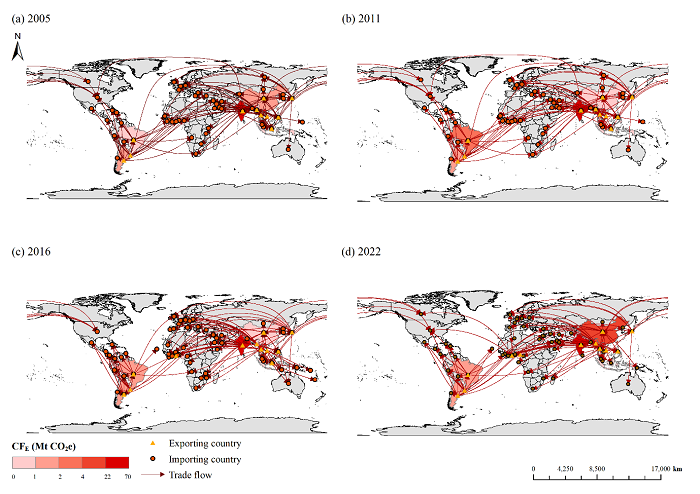
Fig.2 Spatiotemporal distribution of carbon footprint embedded in international rice trade
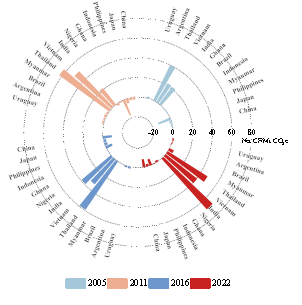
Fig.3 Net carbon footprint of the RFS based on international trade
This work was supported by the Green and Low-Carbon Science Center Project of Science and Technology Innovation Project of Chinese Academy of Agricultural Sciences.
Linkage: https://doi.org/10.1016/j.eja.2026.128238
