Recently, the Innovation Team of Smart Meteorology and Utilization of Agro-climate Resources at the Institute of Environment and Sustainable Development in Agriculture, Chinese Academy of Agricultural Sciences, revealed the temperature thresholds for maize water productivity (WP) and the regulatory effects of optimized phosphorus (P) fertilizer management coupled with nitrogen application under future climate change across the Yellow River Basin (YRB) in China. The study employed a coupled simulation framework combining an ensemble of global climate models and crop models. The relevant findings have been published in Agricultural Water Management, one of the leading international journals in the field of agricultural and forestry sciences.
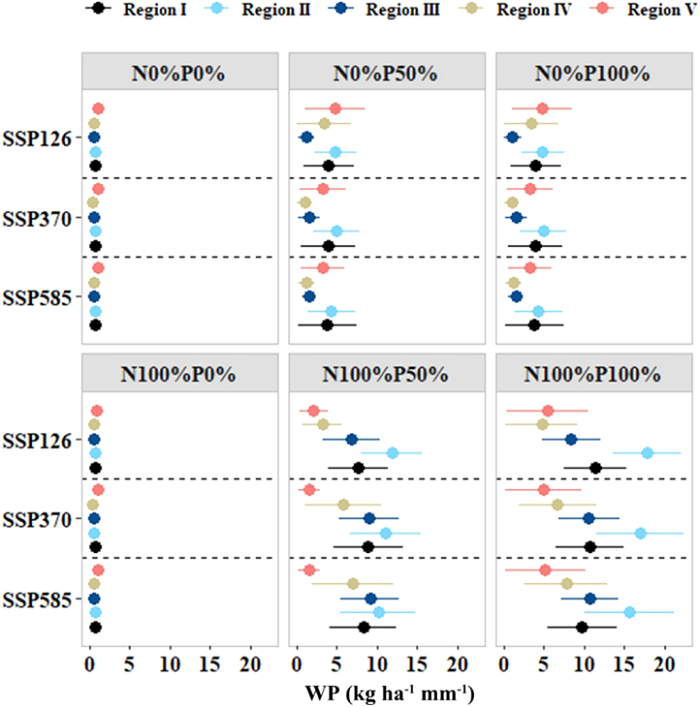
The YRB is severely affected by climate change, with crop yields declining sharply under the same water consumption conditions once the temperature rise exceeds a critical threshold. Therefore, mitigating the adverse impacts of climate change through field management have become challenges for both maintaining stable maize production and achieving high water use efficiency .
This study revealed an overall declining trend in maize WP across the YRB under future climate change scenarios, and even more pronounced declines under high-emission scenarios (SSP 585). Distinct temperature thresholds existed across different maize ecoregions. When temperature surpassed the critical threshold, optimized P fertilizer management could increase maize WP by an average of more than 10%. Among the fertilization strategies tested, combining nitrogen (N) and P application (180kg ha⁻¹ and 90kg ha⁻¹ respectively) performed relatively better, simultaneously promoting yield increases and efficient water use. The study provides a scientific basis for stable grain production and improved water use efficiency across the YRB.
This research was supported by the National Key Research and Development Program of China and other relevant research projects.
DOI: https://doi.org/10.1016/j.agwat.2026.110487
