Recently, the Innovation Team of Novel Water-saving Materials and Agricultural Film Pollution Control at the Institute of Environment and Sustainable Development in Agriculture, Chinese Academy of Agricultural Sciences, revealed the mechanism whereby biodegradable film much, when combined with different irrigation management strategies, saves water, increases rice productivity, and reduces greenhouse gas (GHG) emissions in rice paddy fields. The related findings have been published in Agricultural Water Management.
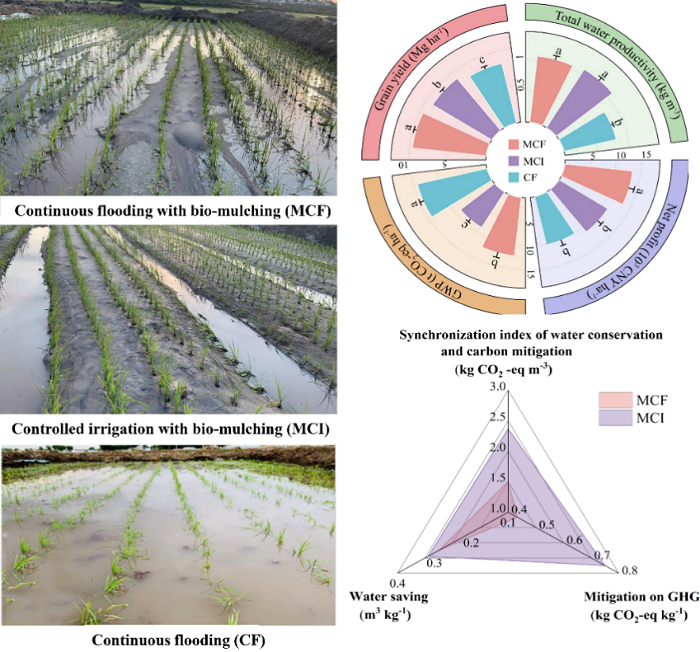
Fig.1 Experimental design and its water saving, yield increase and emission reduction effects
Traditional flooded rice cultivation faces triple constraints - high water input, high emissions and plastic pollution; at the same time, it is difficult to achieve synergy among "water conservation, emission reduction and stable production", as conventional water-saving irrigation often leads to a drop in grain yield and profit. To address these bottlenecks, the study creatively integrated fully biodegradable film mulch with precisely controlled irrigation, providing critical support and a technical paradigm for rice-producing regions in China to respond to climate change, ensure food security, and achieve the strategic goal of "carbon peaking and carbon neutrality" in agriculture.
The study confirmed that, compared with traditional flood irrigation, biodegradable film mulch plus controlled irrigation significantly reduced irrigation water by around 34%, while significantly increasing grain yield by about 9%, and brought down global warming potential (GWP) and GHG intensity (GHGI) by 39% and 44%, respectively. Although biodegradable film mulch increased cost input, mulch plus controlled irrigation and mulch plus continuous flooding increased net profit by 10% and 32%, respectively, owing to their yield increase and water saving effects. This demonstrates the economic and environmental feasibility of this technical system. The study overcame the technical bottleneck of achieving both water conservation and emission reduction in rice production, and fully demonstrated that combining biodegradable film mulch with optimized irrigation management offered an effective pathway to build a climate-smart rice production system. It holds great importance for enhancing the climate resilience of agriculture, advancing the green transformation of the sector and ensuring food security in China.
This research was supported by the National key Laboratory for Efficient Utilization of Agricultural Water Resources, the Key Laboratory of Prevention and Control of Residual Pollution in Agricultural Film under the Ministry of Agriculture and Rural Affairs, and the Agricultural Science and Technology Innovation Program (ASTIP) of the Chinese Academy of Agricultural Sciences.
Linkage: https://doi.org/10.1016/j.agwat.2026.110484
