Recently, the Team of Plant Environmental Engineering of Protected Agriculture at the Institute of Environment and Sustainable Development in Agriculture, Chinese Academy of Agricultural Sciences, developed a ternary fatty acid eutectic phase change material with corn straw biochar as the carrier to address the challenges of high energy consumption, high carbon emissions, and demanding temperature control in fruit and vegetable cold chain logistics. The study provided a novel approach for green preservation and stable temperature regulation within the critical temperature range of 2-8℃ for fruit and vegetable cold chain logistics. The related findings have been published in the Journal of Energy Storage.
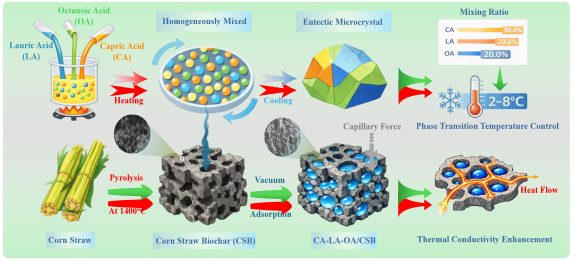
Fig.1 The mechanism by which composite phase change materials are prepared
During cold chain transportation, fluctuations in the low-temperature environment of cold storage could significantly impair the quality and safety of fruits and vegetables. Especially in links such as the "last mile" distribution, challenges such as high energy consumption of refrigeration equipment and the difficulty in accurately controlling temperature are prominent. In view of this, the team constructed a ternary eutectic system with capric acid, lauric acid and n-octanoic acid, and used corn straw biochar as the carrier to enhance heat conduction and suppress leakage.
The results show that the phase transition temperature of the composite phase change material was 3.1℃, the latent heat value was 104.9 J/g, the thermal conductivity was increased to 1.853 W/(m·K). The leakage rate of the material was only 6.49%, and the latent heat attenuation was less than 2.3% after 500 times of cold and heat cycles, showing excellent stability. In the 5L refrigerator simulation experiment, the material maintained the temperature range of 2-8℃ for 560 min, approximately 36% and 77% longer than n-tetradecane and H2O, respectively, demonstrating the potential for application in cold chain transportation and last-mile delivery of fruits and vegetables.
This work was supported by the National Key Research and Development Program of China, the Science Innovation Project of the Chinese Academy of Agricultural Science, the Central Guidance for Local Science and Technology Development Fund, etc.
Linkage: https://doi.org/10.1016/j.est.2026.120418
